
Off-grid lodge waste management presents a very different challenge from managing food waste at an urban hotel, restaurant or resort.
Remote properties may operate far from municipal collection routes, rely on limited road access and manage waste across kitchens, staff accommodation, guest areas and other facilities spread over a large site.
In these environments, simply moving untreated food waste somewhere else can become costly, impractical and difficult to manage.
Distance does not make the organic waste disappear. Instead, it makes good separation, treatment and planning at source even more important.
For conservation-based hospitality, the question is therefore not only:
How do we remove our food waste?
A more useful question is:
What can we prevent, separate and treat before transport becomes necessary?
An urban hospitality property may have frequent municipal or commercial waste collections available nearby.
A remote lodge may not have that luxury.
Properties can be located on private reserves, mountain farms, coastal conservation areas or other remote landscapes where collection routes are long and access may be difficult.
As a result, untreated food waste may need to remain onsite for longer before collection.
Transport can also become a disproportionate part of the waste-management process. A vehicle may have to travel considerable distances simply to remove material that could potentially have been treated closer to where it was generated.
This is why good off-grid lodge waste management should begin inside the operation rather than at the collection vehicle.
When collection is infrequent, it can be tempting to store food waste until there is enough material to justify removal.
However, untreated organic waste continues to break down while it waits.
Depending on how the waste is stored, this may lead to odours, flies, pests, liquids and increasingly unpleasant waste-holding areas.
Poorly contained food waste can also attract wildlife. In a conservation environment, that matters because animals that repeatedly associate kitchens, bins or staff areas with food can change their behaviour around people and infrastructure.
The aim should therefore be to reduce the amount of untreated food waste waiting for transport rather than simply build larger holding areas.
No. The conditions matter.
Methane is strongly associated with the anaerobic decomposition of organic waste in landfill and other oxygen-limited conditions. It is therefore more accurate to focus on keeping suitable organic material out of landfill than to suggest that every container of food waste automatically produces significant methane.
The Western Cape Government identifies organic-waste diversion as an important way to reduce methane emissions associated with landfill while also conserving landfill space.
You can review the province’s current waste-management information through the Western Cape Government Waste Management resources.
The Western Cape continues to work towards a provincial target of 100% organic-waste diversion from landfill by 2027.
Municipalities play an important role in this process through Organic Waste Diversion Plans and their broader waste-management programmes.
However, the provincial target should not be interpreted as one identical direct legal requirement applying to every lodge in exactly the same way.
A property’s obligations may depend on its municipality, contracts, licences, waste-service arrangements and the activities taking place on the site.
For remote hospitality operators, the practical message is still important.
Landfill diversion is becoming a more significant part of waste planning. Properties that generate regular organic waste have good reason to understand their food-waste stream now rather than wait for transport or disposal pressure to force the conversation.
Remote lodges often operate in places where guests come specifically for wildlife, landscapes and access to nature.
That makes back-of-house practices part of the property’s wider conservation story.
A lodge may invest heavily in responsible water use, renewable energy, habitat protection and guest education. Yet poor food-waste practices can undermine those efforts if organic material is stockpiled, poorly contained or routinely transported long distances without considering an earlier treatment option.
This is not about creating a perfect environmental image for guests.
It is about making sure everyday operations support the same conservation principles the property communicates publicly.
Before a lodge can treat food waste effectively, it needs a clean organic-waste stream.
That starts where staff generate the waste.
Kitchen preparation scraps, plate waste and other suitable food material should remain separate from plastic packaging, glass, metal, disposable gloves and general rubbish.
This can become more challenging when a property has several kitchens or food-generation points.
A main lodge kitchen may follow the correct procedure while staff accommodation, a remote picnic site or another food-service area follows a different routine.
For that reason, off-grid systems need clear procedures across the whole property.
Remote properties may also work with seasonal employees, rotating managers or teams responsible for several operational functions.
That makes consistency important.
Management should know who is responsible for separating food waste, moving containers, operating the treatment system, recording volumes and managing the treated material afterwards.
If those responsibilities depend entirely on one enthusiastic staff member, the system may disappear when that person leaves.
Instead, food-waste management should form part of the lodge’s normal operating procedure.
Remote locations can make waste easy to overlook because material does not necessarily pass through a municipal collection system every week.
Measurement changes that.
Once a lodge separates food waste, it can begin to understand how much it actually generates.
That information can help management compare busy and quiet seasons, assess treatment capacity and identify where food-waste prevention may be possible.
It also helps answer a practical question:
How much untreated organic material are we currently transporting simply because we have never measured another option?
There is no single correct treatment system for every lodge.
The right approach depends on food-waste volumes, kitchen locations, staffing, available space, energy infrastructure and what will happen to the treated material afterwards.
Commercial Bokashi can provide a practical option for smaller kitchens or sites that need a relatively simple treatment process.
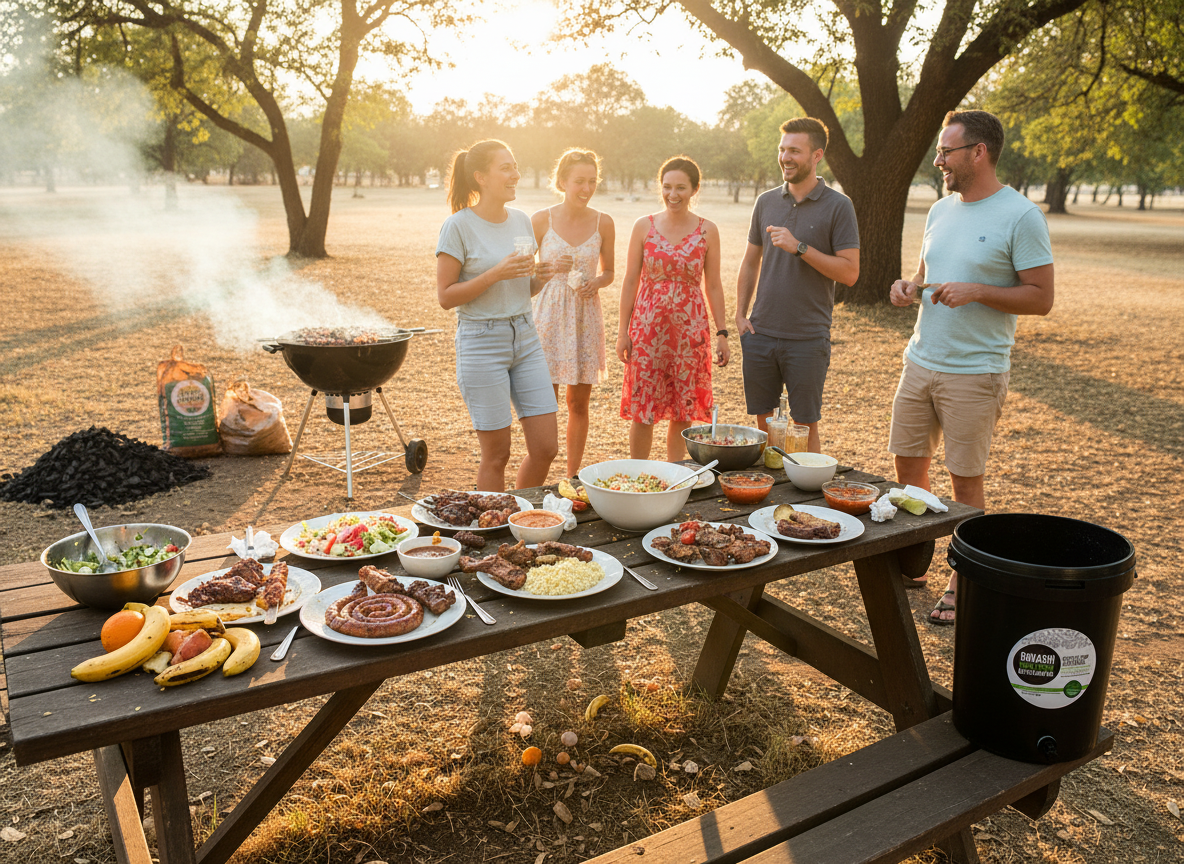
Staff place suitable food waste into sealed, food-grade drums and treat it with Earth Bokashi.
The system requires no electricity, which can make it useful where power availability is limited. Airtight drums also help control odours and restrict access by flies and other pests.
Earth Probiotic specifically identifies the Earth Cube as an onsite treatment option for lodges, boarding houses and sites with distributed kitchens.
The enclosed aerated static-flow system can process up to approximately 18 kilograms of food waste per day, or around 600 kilograms per month.
Where a property generates more food waste, multiple Earth Cubes can be arranged in series.
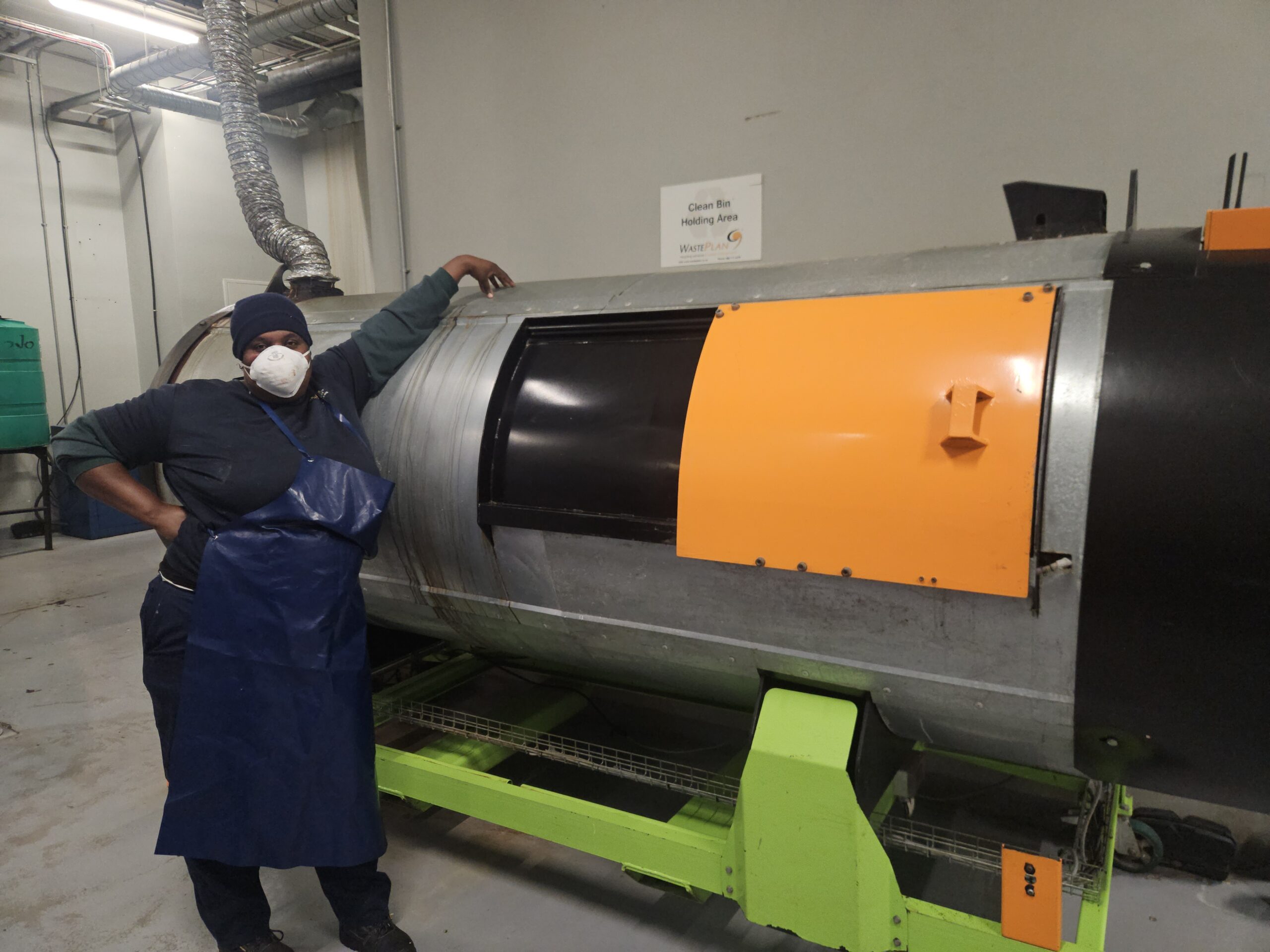
Larger lodges, hotels and resorts may generate volumes that require an automated system.
The Earth Cycler is available for higher-volume onsite food-waste treatment and uses relatively little electricity. Earth Probiotic’s current specifications also allow the machine to operate with off-grid systems via an inverter.
The Earth Cycler measures material inputs and outputs. Where data connectivity is available, remote machine management and online reporting options can provide additional operational visibility.
That remote functionality applies specifically to the Earth Cycler and should not be assumed for every Earth Probiotic food-waste system.
Explore the current Earth Probiotic Food Waste Solutions to compare the available treatment approaches.
For a remote lodge, transport can become one of the most important reasons to rethink food-waste management.
The usual model often looks like this:
Generate waste. Store it. Wait for collection. Transport it elsewhere.
At-source treatment introduces another possibility:
Prevent what can be prevented. Separate the unavoidable food waste. Treat suitable material onsite. Then manage the onward pathway.
This does not mean nothing ever needs to leave the property.
Instead, it means the lodge makes the transport decision after it has managed the organic stream rather than using transport as the first response.
Treatment is not automatically the end of the process.
Bokashi-treated food waste, for example, is fermented rather than converted into finished compost inside the drum.
Other onsite treatment systems may also produce material that needs further maturation or an appropriate downstream process before its intended use.
For this reason, Earth Probiotic should be understood as the enabling treatment and system partner at the front end of the pathway.
The objective is to help a lodge separate, treat and stabilise suitable organic material and prepare it for the next appropriate stage.
Running a remote hospitality property requires flexibility. Roads, energy supply, staffing and collection services may all create constraints that an urban property does not face.
Those constraints are real.
However, they also make planning more important.
Good off-grid lodge waste management starts by understanding what the property generates and where that waste currently goes.
From there, the lodge can build a system around prevention, separation, measurement, appropriate at-source treatment and a responsible onward pathway.
For a remote site, that can reduce pressure on storage and transport while giving management greater control over an unavoidable operational waste stream.
Remote does not mean exempt. It means the system needs to work where the waste is actually generated.
Explore Earth Probiotic’s food-waste solutions for lodges, hotels and other commercial operations, or contact the team to discuss the volumes and operating conditions of your site.