
As seasonal demand increases across South Africa’s hospitality, catering and food retail sectors, existing food-waste management systems face a practical test. From separation at source to treatment capacity, operational readiness depends on more than collection schedules.
As these sectors prepare for the year-end peak, attention naturally turns to staffing, stock availability, service delivery and meeting increased demand. Yet one operational consideration deserves equal attention: how effectively will existing commercial food waste management systems cope when volumes rise?
In commercial kitchens, hotels, restaurants and food retail operations, increased activity places additional pressure on waste storage areas, collection schedules and infrastructure. Systems that function adequately during quieter periods may struggle when kitchens operate at full capacity and food waste accumulates more quickly.
The challenge extends beyond disposal. Food waste must be separated, contained, handled and directed into an appropriate treatment or recovery process. Each stage requires coordination, from the point where waste is generated to its final destination.
Six operational considerations deserve attention ahead of peak season:
A food-waste management system is rarely tested under ideal operating conditions. Its limitations often become more apparent when business activity increases.
A hotel serving additional breakfasts, a restaurant accommodating more diners or a retailer preparing larger volumes of fresh food may experience changes in both the quantity and composition of its food waste.
Consequently, storage areas can fill more quickly, internal waste movements may increase, and established routines can become difficult to maintain.
However, adding more bins or scheduling additional collections does not necessarily resolve the underlying problem. Businesses must first determine whether their processes can accommodate higher volumes without compromising separation, handling or treatment.
Peak season does not necessarily create weaknesses in food-waste management. It often exposes weaknesses that already exist.
Food-waste management starts long before a collection vehicle arrives.
In a commercial kitchen, the first operational decision is where food scraps are placed after they are generated. If suitable containers are unavailable, poorly positioned or inconsistently used, contamination can occur before waste reaches the designated storage area.
This makes separation at source an essential part of operational planning.
Collection points should be conveniently located without disrupting food preparation or service. Containers must also suit the waste stream, expected volumes and handling procedures. Furthermore, businesses need a clearly defined process for moving food waste to temporary storage, treatment or onward processing.
The importance of this approach is reflected in South Africa’s Strategy for Reducing Food Losses and Waste. The strategy addresses food loss and waste reduction across the supply chain, alongside technologies and circular-economy approaches that support more effective resource management.
For commercial operations, these wider objectives begin with practical decisions made on site.
Even well-designed infrastructure depends on consistent staff participation.
During busy periods, temporary employees may join established teams, responsibilities can shift between departments, and kitchen staff must work within tighter service schedules. Under these conditions, complicated waste-handling procedures become harder to maintain.
An effective system should therefore be straightforward, clearly communicated and integrated into daily operations.
Employees need to understand which materials belong in designated containers, where those containers are located and what happens when they are full. Supervisors, meanwhile, should monitor separation practices and address problems before they become routine.
Training is important, but so is workplace design. A conveniently positioned food-waste container is more likely to be used correctly than one that requires unnecessary movement during service.
Ultimately, staff behaviour is not separate from the waste-management system. It is part of the system itself.
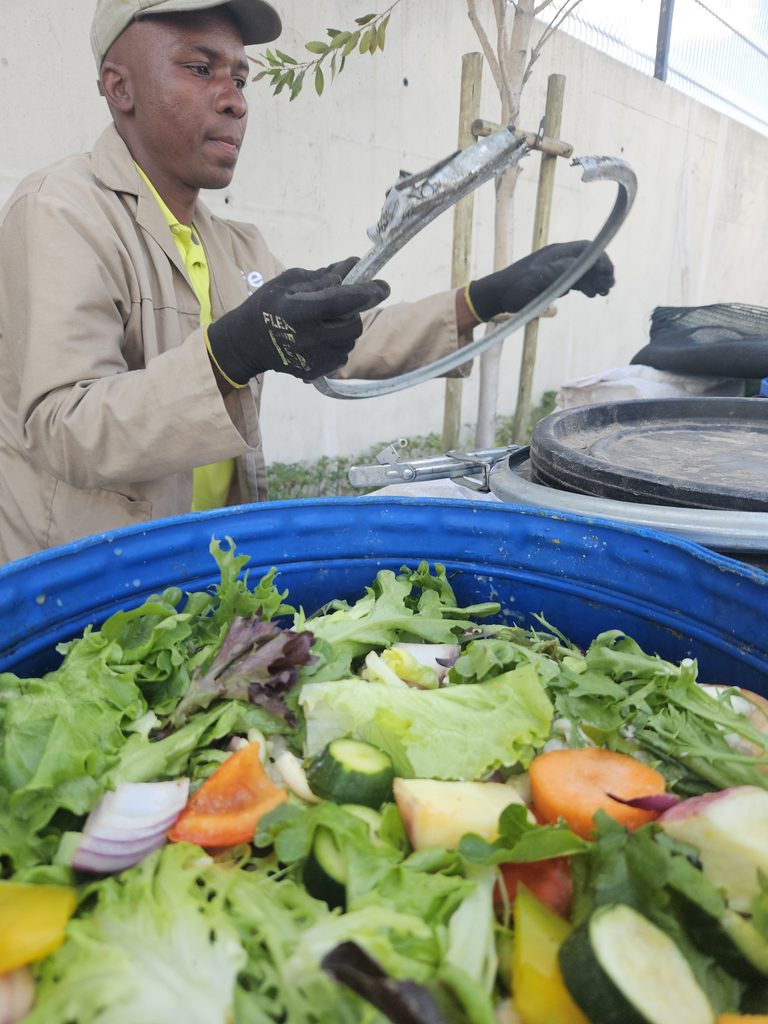
Waste collection remains an important component of commercial waste management. However, relying entirely on removal can create challenges involving storage space, collection frequency and transport arrangements.
Additional collections may be appropriate during busy periods. Nevertheless, organisations should also consider whether treating food waste closer to where it is generated could provide greater operational flexibility.
Organic waste treatment at source offers several approaches, depending on the operation’s requirements.
For smaller commercial kitchens, Bokashi treatment can stabilise suitable food waste in sealed food-grade drums before it moves to the next processing stage.
Where on-site composting infrastructure is appropriate, enclosed systems such as the Earth Cube may provide an alternative for suitably sized operations.
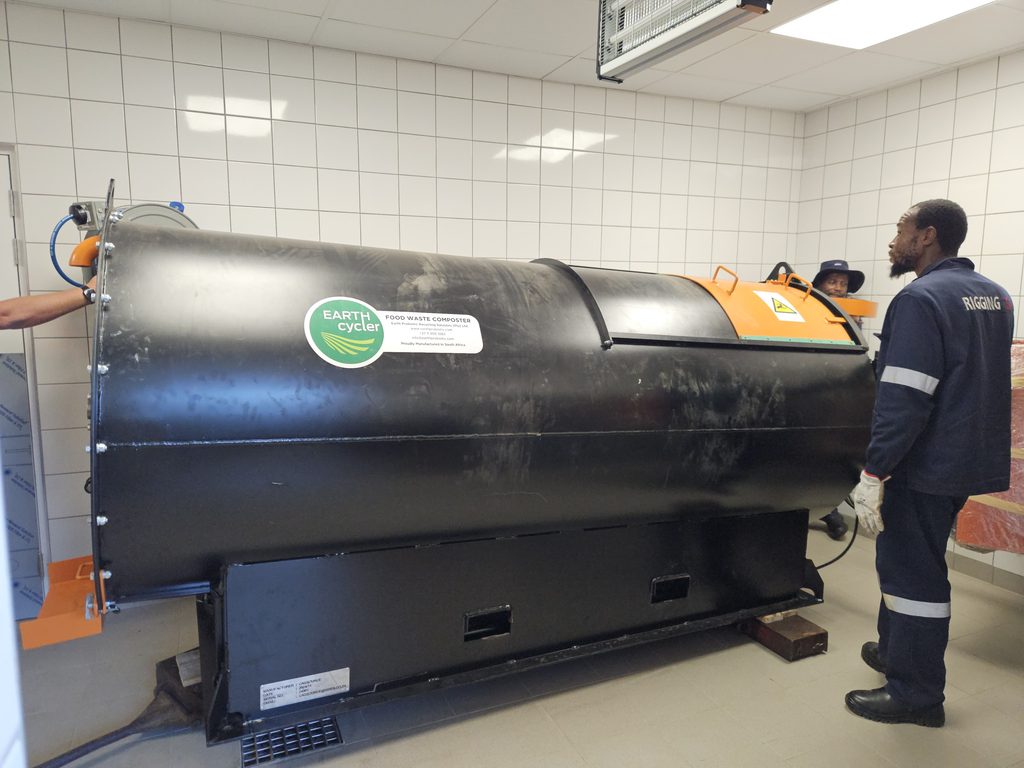
Larger facilities can assess automated in-vessel treatment systems, including the Earth Cycler, where daily volumes and infrastructure justify the investment.
These technologies do not eliminate the need for responsible downstream management. Instead, they provide different ways to treat food waste before further processing.
Importantly, treatment at source should complement waste prevention and a properly designed management programme, rather than replace either.
Selecting a food-waste treatment system begins with understanding the operation.
A small restaurant and a large retail centre may both generate food waste, but their requirements can differ considerably. Volume is an obvious consideration, although it is not the only one.
Businesses should examine where food waste originates, how much is generated during normal and peak periods, what space is available, and whether water, electricity and staffing can support the proposed system.
The destination of treated material must also form part of the assessment.
Earth Probiotic’s commercial food-waste solutions include Bokashi treatment, the enclosed Earth Cube and the automated Earth Cycler. Each serves different operating conditions, making an initial assessment essential before selecting a technology.
Furthermore, fermented food waste or material discharged from a treatment system may require additional composting, maturation or other appropriate processing before its intended end use.
Consequently, equipment selection should be based on the complete waste-management process, rather than the capabilities of a single machine.
An organisation cannot accurately assess its treatment requirements without understanding the quantities of food waste it generates.
Yet measurement need not begin with sophisticated reporting systems.
Recording daily or weekly quantities, identifying where the greatest volumes arise and monitoring changes during peak periods can provide valuable operational information.
For example, a kitchen may discover that preparation waste remains relatively consistent while post-consumer food waste increases significantly during busy service periods. That distinction matters because prevention, separation and treatment requirements may differ.
In addition, monitoring container usage, collection frequency and treatment capacity can help managers identify pressure points before they disrupt operations.
Where automated technologies offer measurement and reporting functions, these can provide a more detailed understanding of system performance.
However, data should inform decisions rather than become an administrative exercise.
The objective is not simply to measure food waste. It is to use that information to manage it more effectively.
As year-end demand approaches, commercial operators have an opportunity to review food-waste management alongside their other operational preparations.
That review should consider whether employees understand their responsibilities, whether infrastructure can accommodate increased volumes, and whether treatment and downstream arrangements remain reliable.
These are not isolated waste-management questions. They affect space utilisation, staff efficiency, service continuity and longer-term operational planning.
The most resilient systems are designed around the realities of the workplace, with enough flexibility to respond when circumstances change.
Ultimately, peak-season readiness is not measured only by how quickly waste can be removed from a site. It is reflected in how effectively an organisation manages food waste from the moment it is generated.
The opportunity lies in strengthening the people, processes and infrastructure that keep those systems working, even under pressure.